What Is Deepfake? How Deepfake Technology Works
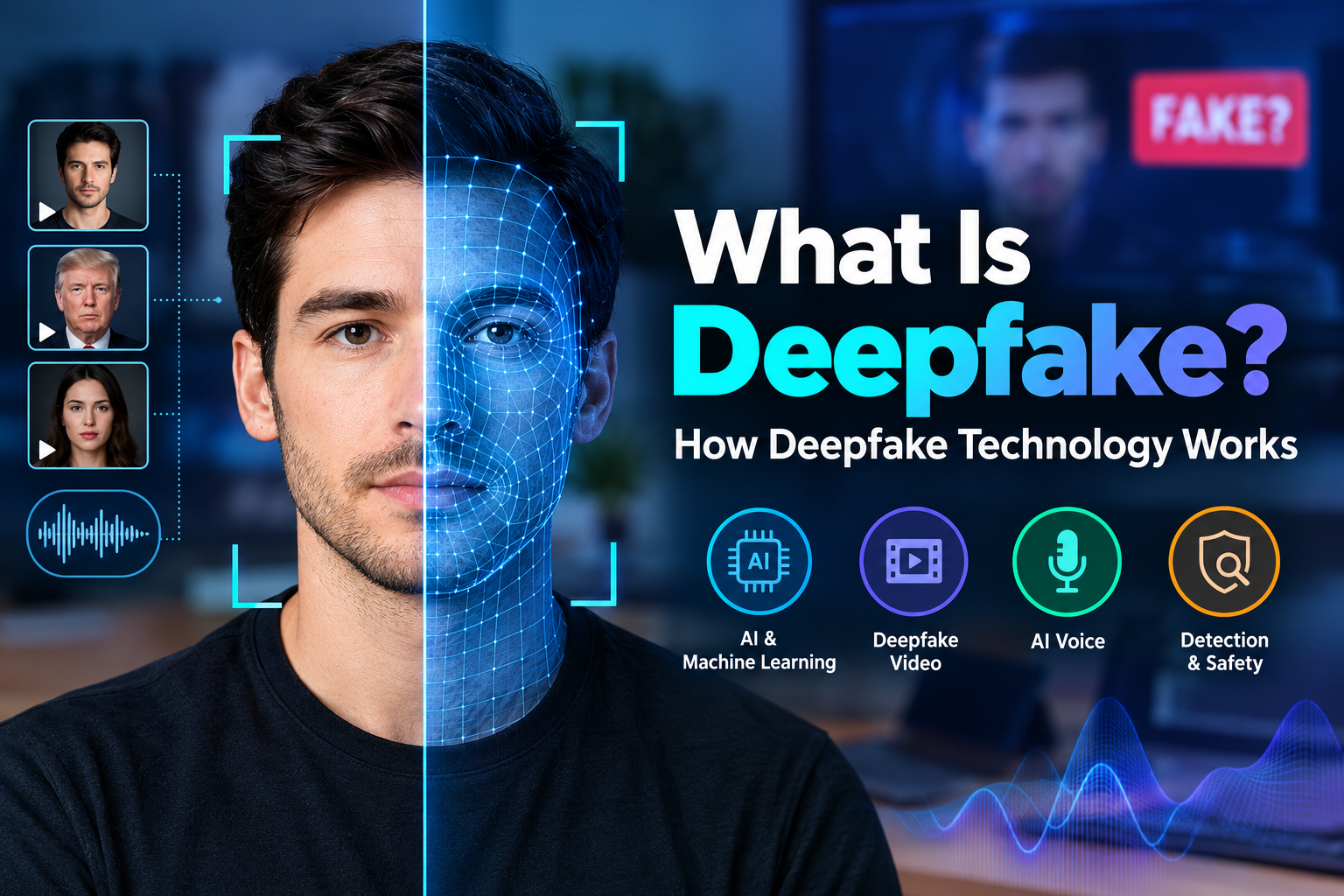
What Is Deepfake? Understanding Deepfake Technology
Have you ever watched a video online and wondered whether the person in it was actually saying or doing those things? With today’s deepfake technology, it can be surprisingly difficult to tell what is real and what is not.
So, what exactly is a deepfake? A deepfake is AI-generated or manipulated content that can make someone appear to say or do something that never actually happened. It can be created using a combination of artificial intelligence (AI), machine learning, and deep learning. Deepfakes can involve videos, images, or even audio recordings.
How Does Deepfake Technology Work?
Deepfake technology works by training AI models with large amounts of data, such as photos, videos, or voice recordings. The system studies details like facial expressions, speech patterns, and body movements.
Once the AI has learned these patterns, it can generate or modify content in a realistic way. For example, in a deepfake video, one person’s face can be placed over another person’s face while keeping the original expressions and movements.
AI voice technology can work in a similar way. After learning someone’s voice, an AI system can generate speech that sounds very similar to that person.
Some deepfake systems have used technologies such as Generative Adversarial Networks (GANs), while newer AI models use other advanced techniques to create realistic synthetic media.
Common Uses of Deepfake
This technology is not necessarily bad. In fact, it can be useful in several creative and professional fields.
The entertainment industry can use AI-generated faces, voices, and visual effects to create scenes that would otherwise be difficult or expensive to produce. Content creators can also use AI avatars and synthetic voices for videos and other digital content.
Deepfake technology can also have applications in education, training, advertising, and filmmaking. However, problems can arise when the same technology is used to deceive people.
Why Are Deepfakes Dangerous?
One major concern surrounding deepfakes is misinformation. A fake video or audio recording can make it look like a politician, celebrity, or even an ordinary person said or did something that never happened.
Deepfakes can also be used for scams, identity misuse, fake news, and misleading social media posts. As AI-generated content becomes more realistic, it is becoming harder for people to recognize manipulated media simply by watching or listening to it.
How Can You Detect a Deepfake?
Spotting a deepfake is not always easy, but there are a few things you can look for. Unnatural facial movements, strange blinking, inconsistent lighting, distorted backgrounds, unusual skin textures, or poor lip-sync may be warning signs.
You can also use deepfake detection tools to analyze suspicious images, videos, or audio. However, detection tools are not perfect. If something seems suspicious, it is better to check the information through trusted news sources or other reliable websites before sharing it.
The Future of Deepfake Technology
Deepfake technology is likely to become even more advanced in the coming years. Better AI models could make synthetic videos, voices, and images more realistic and useful for entertainment, education, and digital communication.
At the same time, the risks will continue to grow. Better AI detection tools, digital verification systems, and public awareness will be important for dealing with misleading AI-generated content.
Conclusion
In simple terms, a deepfake is AI-generated or manipulated media designed to look or sound authentic. The technology has useful applications in entertainment, education, and creative work, but it can also be misused for scams, misinformation, and digital deception.
As AI continues to evolve, understanding deepfake technology and learning how to verify online content will become increasingly important. Being careful about what we watch, hear, and share can help us stay safer in an AI-powered digital world.
Share this content: