GPT-6 Astra: OpenAI’s Most Advanced AI Model Explained
GPT-6 Astra: OpenAI’s Most Advanced AI Model Explained
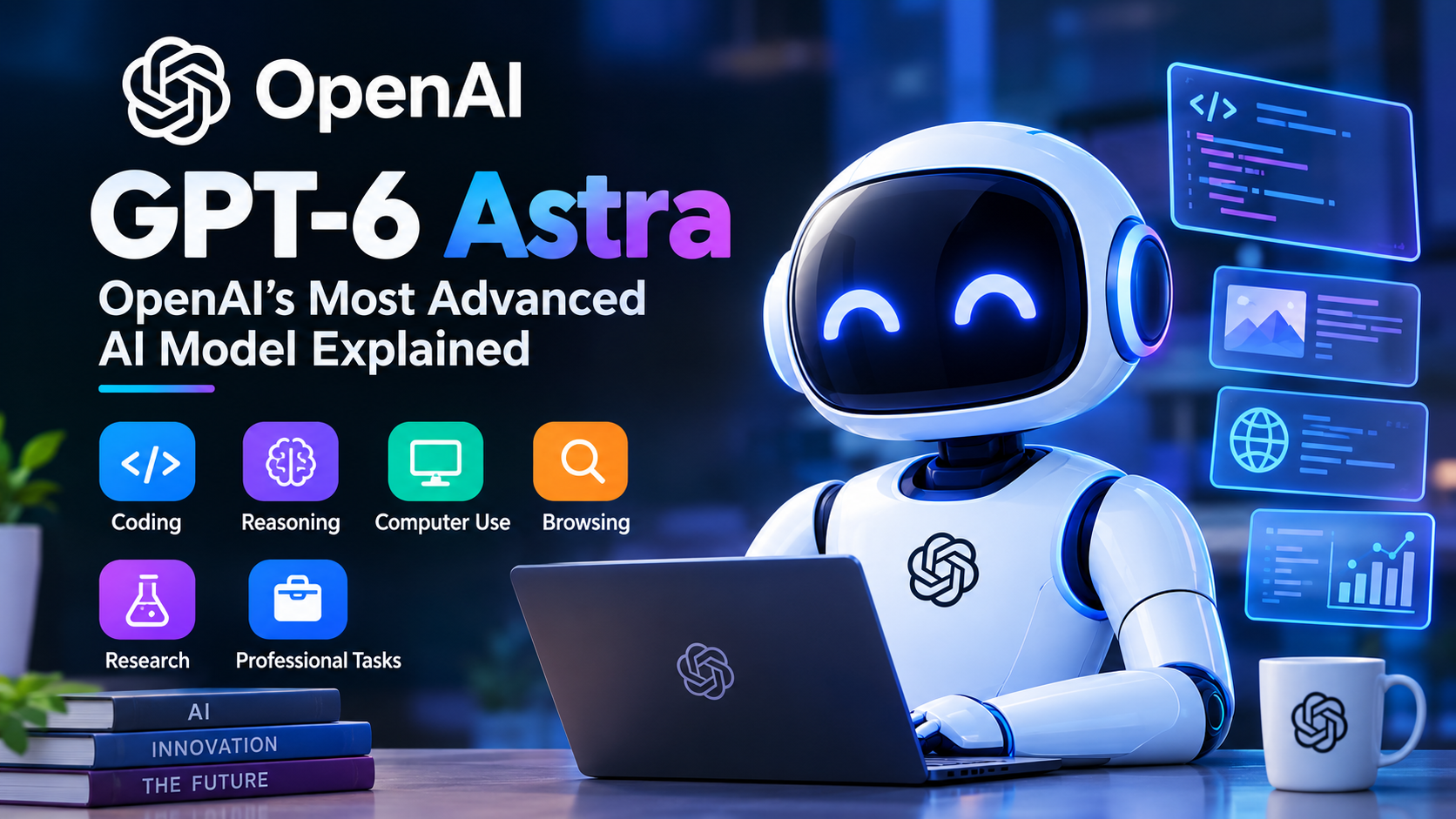
Artificial intelligence is changing faster than ever, and GPT-6 Astra is one of the latest developments attracting attention in the AI world. Developed by OpenAI, GPT-6 Astra is built to handle much more than simple questions and answers. It is designed for complex reasoning, coding, computer use, scientific research, web browsing, and professional tasks.
What makes Astra interesting is its focus on actually getting work done. Instead of only giving users instructions, the model can interact with computers, websites, applications, and digital tools to help complete different types of tasks.
What Is GPT-6 Astra?
GPT-6 Astra is a next-generation AI model from OpenAI aimed at users who need advanced reasoning and practical AI assistance. It can be used for tasks such as software development, research, data analysis, document creation, browsing, and other demanding workflows.
OpenAI reports impressive results from Astra across several advanced benchmarks. The model achieved 98% on FrontierMath Tier 4, 99.9% on ARC-AGI-3, and 100% on ExploitBench. These results highlight its capabilities in areas such as advanced mathematics, reasoning, and cybersecurity.
For everyday users, the most important point is that Astra is designed to go beyond simply generating text. It can understand complicated instructions and work through multi-step tasks.
Advanced Computer Use
One of the most notable features of GPT-6 Astra is its ability to interact with computers.
For example, an AI assistant can potentially help fill out online forms, organize information, update CRM records, browse websites, create documents, or work with different software applications. This brings AI closer to acting like a digital assistant rather than simply a chatbot.
Astra can also work with websites, desktop applications, and internal business tools. This can be particularly useful in situations where a specific application does not have an API available.
Astra for Coding
Developers are another major group that could benefit from GPT-6 Astra. The model is designed to assist with complicated software engineering tasks, including understanding codebases, finding bugs, writing code, testing changes, and troubleshooting problems.
Long coding sessions can often become difficult for AI models because they need to keep track of a large amount of information. Astra’s improved context handling in Codex is designed to make this process more reliable by allowing important information from earlier parts of a task to remain accessible.
For developers working on large or complicated projects, this could make AI-assisted programming considerably more practical.
AI for Science and Research
Astra is not limited to coding and office work. OpenAI also highlights its potential for science and research.
The model can combine advanced reasoning with computer interaction to analyze data, examine results, create plots, and work with specialized software. This could be useful for researchers who regularly deal with large datasets or repetitive computer-based tasks.
Rather than replacing researchers, AI like Astra could help reduce the amount of time spent on routine work and allow researchers to focus more on experiments, analysis, and new ideas.
Safety and Alignment
As AI systems become more capable, safety becomes increasingly important. OpenAI has therefore placed significant emphasis on AI safety and alignment with GPT-6 Astra.
The model is designed to better understand user intent and follow authorized instructions while avoiding actions outside the intended scope of a task.
OpenAI also says that Astra is its first model to reach the critical cybersecurity capability threshold under its Preparedness Framework. This makes safety and responsible deployment an important part of the model’s development.
GPT-6 Astra Availability
GPT-6 Astra is designed for demanding AI workloads across OpenAI’s ecosystem. It can be used through ChatGPT Work, Codex, and the OpenAI API, with availability also extending to platforms such as Microsoft Azure and AWS Bedrock.
For developers using the API, OpenAI lists a 1,050,000-token context window. The model also supports different reasoning effort levels, giving developers more control over how much reasoning is used for a particular task.
The Future of AI with GPT-6 Astra
Astra represents an important change in the way we think about AI assistants. Instead of being limited to answering questions or generating content, advanced AI models are increasingly capable of participating in complete digital workflows.
With its combination of reasoning, coding, computer use, browsing, and research capabilities, Astra could become a valuable tool for developers, researchers, businesses, and everyday users.
The bigger picture is even more interesting. As AI continues to improve, models like GPT-6 Astra could move us closer to assistants that can understand a user’s goal, interact with digital environments, and complete complicated tasks with less human intervention.
For anyone following the future of artificial intelligence, GPT-6 Astra is certainly a development worth watching.
Share this content:












1 comment