Future of Artificial Intelligence: 5 Key Trends
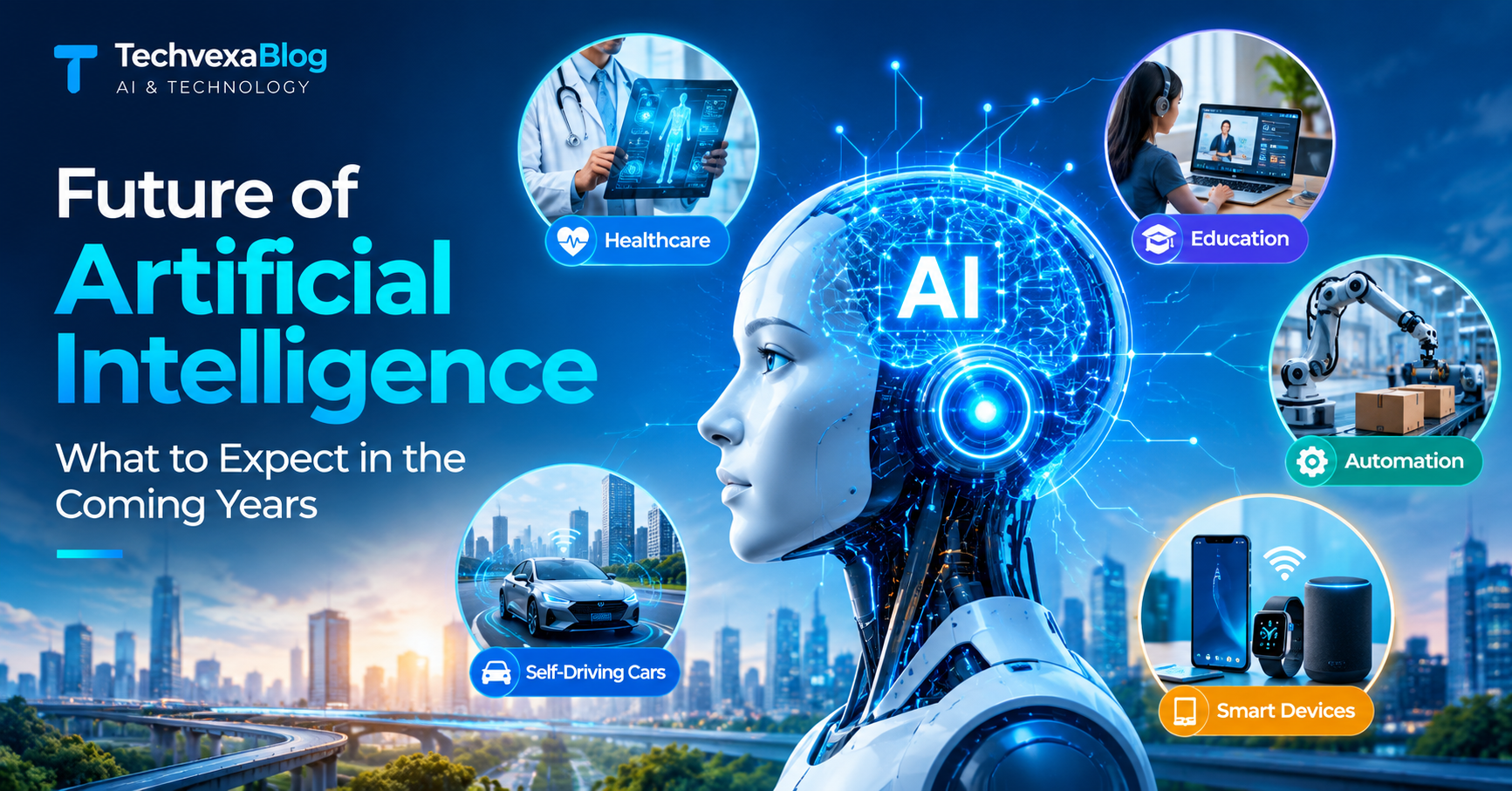
Future of Artificial Intelligence: What to Expect in the Coming Years
Artificial Intelligence (AI) is changing the way we live, work, and use technology. From AI chatbots and virtual assistants to self-driving cars and smart healthcare systems, AI is becoming a part of everyday life. But what will happen as this technology continues to develop? The future of artificial intelligence could bring new opportunities, smarter devices, and major changes across different industries. At the same time, it will introduce challenges that people and businesses need to understand.
What Is the Future of Artificial Intelligence?
The future of AI is all about creating smarter systems that can help people solve problems, complete tasks, and make better use of information. Today, AI tools can write content, generate images, analyze data, and assist with coding.
As technology improves, these tools may become more accurate, useful, and personalized. People could use AI assistants to manage everyday tasks, while businesses may rely on them to save time and improve productivity.
1. Future of Artificial Intelligence in the Workplace
One of the biggest effects of artificial intelligence will be seen in the workplace. Many businesses already use AI tools to handle repetitive tasks, respond to customer questions, and organize large amounts of information.
For example, AI chatbots can provide quick customer support, while AI writing tools can help marketers develop content ideas. Developers can also use AI coding assistants to identify errors and write code more efficiently.
However, automation may affect some existing jobs. At the same time, it could create new opportunities in areas such as AI development, cybersecurity, and data analysis. Learning new digital skills will help people adapt to these changes.
2. Future of Artificial Intelligence in Healthcare
Healthcare is another field where AI has the potential to make a real difference. AI-powered systems can help doctors examine medical images, review patient information, and identify patterns that might otherwise be difficult to notice.
In the future, AI could also help researchers develop medicines and support more personalized treatment. Smartwatches and other wearable devices may use AI to monitor health patterns and alert users to possible concerns.
Still, AI should not replace professional medical judgment. Healthcare systems must be tested carefully to ensure patient safety, protect private information, and provide reliable results.
3. AI Will Make Learning More Personal
Education could become more flexible with the help of artificial intelligence. Instead of following the same learning method, students may be able to use AI-powered platforms that adapt to their individual needs.
For instance, an AI tutor can explain a difficult topic in simpler language, generate practice questions, or help a student understand programming. Teachers may also use AI tools to prepare lessons and reduce time spent on routine administrative tasks.
The key is to use AI as a learning assistant rather than a replacement for independent thinking. Students still need to check facts, ask questions, and develop their own understanding.
4. Smart Devices Will Become More Intelligent
Artificial intelligence is already changing smartphones, laptops, smartwatches, and other connected devices. Future devices may offer better voice recognition, faster photo editing, real-time language translation, and more useful personal assistants.
Another growing trend is on-device AI, where certain tasks are processed directly on a phone or computer instead of relying entirely on cloud servers. Depending on the implementation, this could improve response times and help protect personal data.
These improvements may make everyday technology easier and more convenient to use.
5. Challenges in the Future of Artificial Intelligence
Although AI offers many benefits, it also comes with risks. Privacy concerns, cybersecurity threats, biased results, and changes in employment are issues that cannot be ignored.
AI-generated deepfakes are another growing concern because they can make fake images, videos, and audio recordings appear real. This makes it increasingly important to verify information before sharing it online.
Technology companies and governments will need to focus on responsible AI development. Strong security measures, transparent systems, and human oversight can help reduce these risks.
Conclusion: What Does the Future Hold for AI?
The future of artificial intelligence is full of possibilities. From healthcare and education to business and smart devices, AI could change many aspects of everyday life. It may help people work more efficiently, access information more easily, and develop new solutions to difficult problems.
However, the benefits will depend on how carefully this technology is developed and used. People who stay informed, build digital skills, and learn to use AI responsibly will be better prepared for the changes ahead.
Artificial intelligence is more than a technology trend. It is an evolving part of our digital world, and its future will depend on the choices we make today.
Share this content:










2 comments