Best AI Tools for Small Business in 2026
Best AI Tools for Small Business in 2026
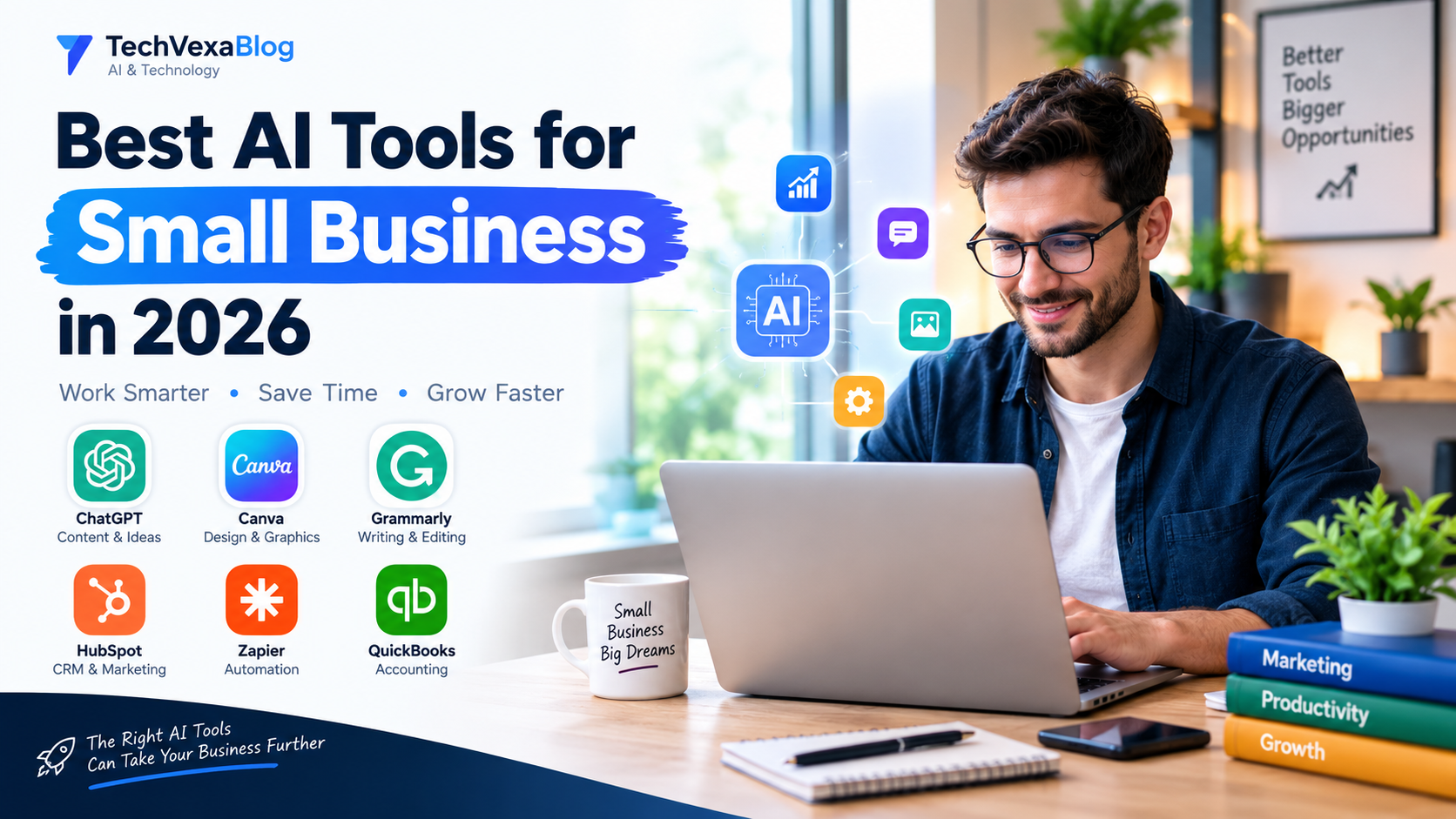
Running a small business can be challenging, especially when you have to manage marketing, customer service, and daily tasks. The best AI tools for small business in 2026 can help save time, reduce workload, and improve productivity. From creating content with ChatGPT to designing graphics with Canva, these AI tools make business management easier and more efficient.
Today, the best AI tools for small business help entrepreneurs work more efficiently without needing a large team. From writing marketing content to automating repetitive tasks, these tools can simplify many everyday responsibilities. Whether you own an online store, run a startup, or manage a local business, the right AI tools can help you stay organized and focus on growing your business.
Let’s explore six useful AI tools that small businesses can consider in 2026.
1. ChatGPT – Best AI Tool for Business Productivity
ChatGPT is a useful AI assistant for small business owners who need help with different tasks. You can use it to brainstorm business ideas, write emails, create marketing plans, and develop product descriptions.
It can also help prepare social media posts, answer common questions, and organize your thoughts before making business decisions. For entrepreneurs who handle several responsibilities themselves, ChatGPT can be a practical everyday assistant.
Best for: Business planning, content creation, research, and productivity.
2. Canva AI – Best for Graphic Design and Marketing
Good visuals can make a business stand out, especially on social media. Canva makes it easier to create attractive designs without hiring a professional designer for every project.
Small business owners can use Canva to design promotional banners, Instagram posts, presentations, flyers, and advertisements. Its AI-powered features can also help with certain design and content creation tasks, depending on the plan.
If you want your business to look professional while keeping design work simple, Canva is worth considering.
Best for: Social media graphics, advertisements, and marketing materials.
3. Grammarly – Best AI Tool for Business Writing
Clear writing helps businesses build trust with customers. Grammarly assists with grammar, spelling, punctuation, and sentence clarity. Its AI features can also help rewrite text and adjust the tone of professional messages.
You can use Grammarly when writing business emails, website content, proposals, and customer support replies. It is particularly helpful if you want your communication to sound clear and professional.
Best for: Email writing, proofreading, and business communication.
4. HubSpot – Best for AI-Powered Marketing and CRM
Keeping track of customers and potential buyers becomes difficult as a business grows. HubSpot offers customer relationship management (CRM) tools that help businesses organize contacts, manage leads, and monitor customer interactions.
Its marketing and AI-powered features can assist with content creation and certain sales and marketing workflows. This can help small teams manage customer relationships more effectively.
Some advanced features require paid subscriptions, so check the available plans before choosing a solution.
Best for: Customer management, lead tracking, and marketing.
5. Zapier – Best for Business Automation
Many business tasks are repetitive, such as saving customer details, sending notifications, or transferring information between apps. Zapier helps automate these activities by connecting different applications.
For example, you could set up a workflow that saves information from a contact form to a spreadsheet or sends a notification when a new customer inquiry arrives. This reduces manual work and gives business owners more time for important tasks.
Best for: Workflow automation and connecting business applications.
6. QuickBooks – Best for Accounting and Financial Management
Managing business expenses and invoices can become confusing without a proper system. QuickBooks provides accounting tools that help businesses track income, record expenses, create invoices, and organize financial information.
Depending on the product and subscription plan, automation features can also help simplify certain accounting tasks. However, business owners should review financial records carefully and consult an accounting professional when necessary.
Best for: Bookkeeping, invoicing, and expense management.
Benefits of Using AI Tools for Small Business
AI tools can make everyday business operations easier in several ways:
- Save time: Complete repetitive tasks more efficiently.
- Improve productivity: Handle more work without immediately expanding your team.
- Create better marketing content: Develop ideas, written content, and promotional designs.
- Improve customer communication: Prepare clear responses and organize customer inquiries.
- Simplify daily operations: Connect applications and streamline workflows.
However, AI is not perfect. Generated content may contain errors, and some tools require paid subscriptions to unlock advanced features. Always review AI-generated information and avoid sharing confidential customer or business data without checking the tool’s privacy policies.
How to Choose the Best AI Tool for Your Business
The right tool depends on what your business needs most. If you want help with writing and brainstorming, ChatGPT may be a good starting point. Canva is useful for visual marketing, while Grammarly can improve business communication.
For customer management, consider HubSpot. If you spend too much time on repetitive tasks, Zapier may help. QuickBooks is worth exploring if you need organized accounting and invoicing.
Start with the features you actually need. Compare pricing, check free-plan limitations, and test a tool before committing to a paid subscription.
Conclusion
The best AI tools for small business in 2026 can help entrepreneurs save time, improve marketing, organize finances, and manage daily tasks more efficiently. ChatGPT, Canva, Grammarly, HubSpot, Zapier, and QuickBooks each offer different benefits for small businesses.
You don’t need to use every tool at once. Start with one or two that solve your biggest challenges, evaluate the results, and expand your toolkit as your business grows. With the right approach, AI can become a valuable partner in building a more productive and successful business.
Share this content:









1 comment