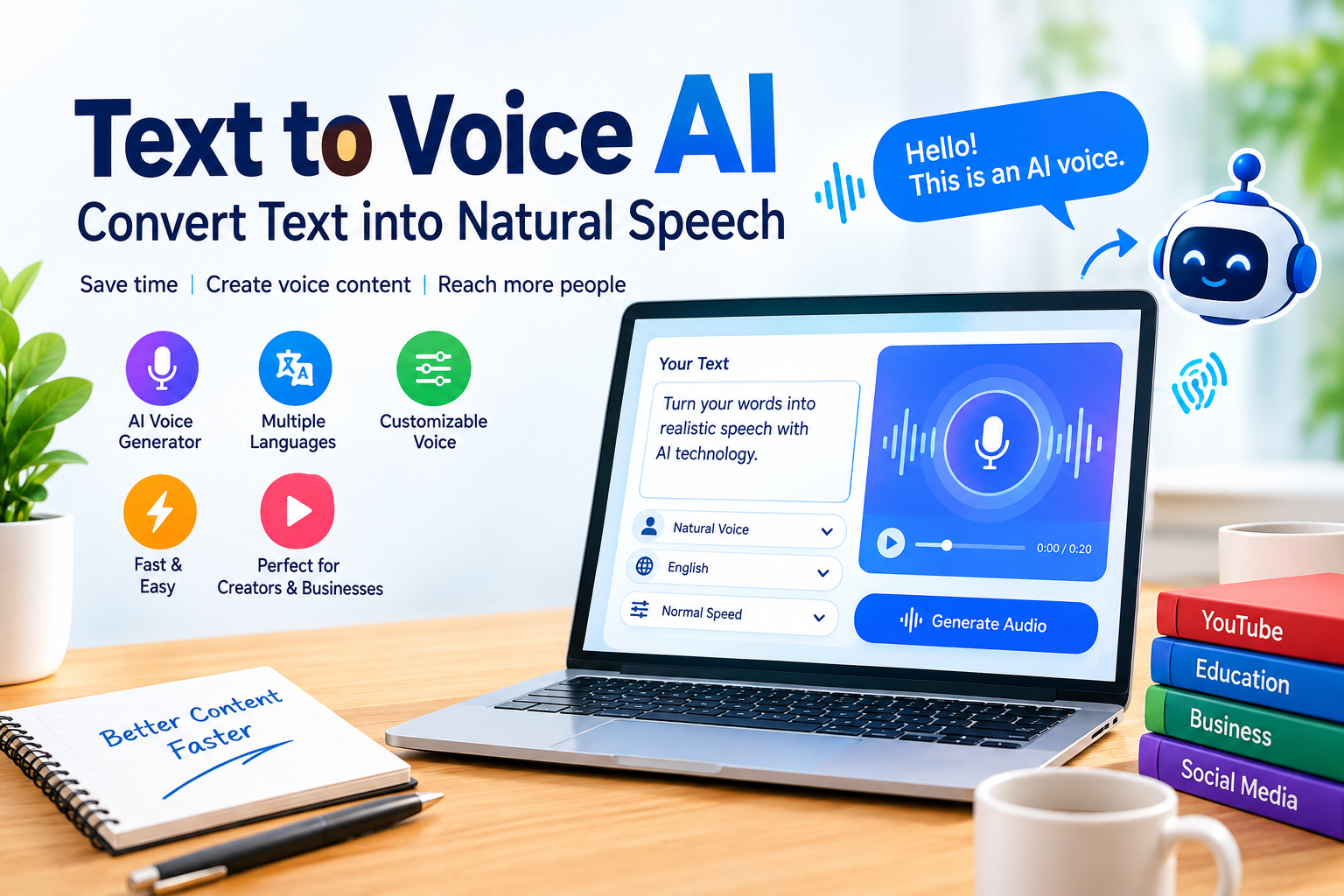
Text to Voice AI: Convert Text into Natural Speech
Text to Voice AI: How AI Converts Text into Natural Speech
Creating voice content can take a lot of time. You may need to write a script, record your voice, remove background noise, and edit the audio before it is ready to use. Text to Voice AI is making this process much easier by turning written text into natural-sounding speech within minutes.
This technology is becoming popular among content creators, YouTubers, bloggers, educators, businesses, and social media creators who want to produce voice content without recording everything themselves.
What Is Text to Voice AI?
Text to Voice AI is a technology that uses artificial intelligence to convert written text into spoken audio. It is also commonly called AI text to speech or a text to speech AI generator.
Using an AI voice tool is usually simple. You enter or paste your script, choose a voice, adjust the settings if needed, and generate the audio. Modern AI voice generators can produce speech with natural pronunciation, pauses, and different speaking styles.
How Does It Work?
Text to Voice AI uses technologies such as machine learning and natural language processing (NLP) to understand written text. The system analyzes the words and sentence structure before generating speech.
Unlike older text-to-speech systems that often sounded robotic, newer AI voice technology can create more natural and expressive voices. Some tools also let users adjust the speaking speed, pitch, tone, language, and style.
Because of these options, AI-generated voices can be used for different types of content, including tutorials, advertisements, podcasts, educational videos, and social media posts.
Main Benefits
One of the main advantages of Text to Voice AI is the time it can save. Recording a voiceover manually may require a microphone, a quiet place, and additional audio editing. With an AI voice generator, you can turn a finished script into audio much faster.
Another benefit is the variety of voices and languages available in many tools. This can be helpful when creating content for audiences from different regions.
It can also be a practical option for small businesses and individual creators. Instead of arranging a separate voice recording for every project, they can use AI-generated voiceovers when the tool’s licensing terms allow it.
Uses of AI Voice Technology
AI voice technology can be useful in many areas. You can create voiceovers for YouTube videos, explainer videos, online courses, podcasts, presentations, advertisements, and social media content.
Bloggers can also turn written articles into audio, giving readers another way to consume their content. Businesses may use AI voices for product tutorials, training materials, presentations, and promotional content.
For creators who regularly produce videos, having an AI voice generator can make the content creation process more convenient.
Is Text to Voice AI Easy to Use?
For most users, Text to Voice AI is quite easy to use. Most platforms have a straightforward interface where you can add your script, select a voice, make a few adjustments, and generate the final audio.
However, not every AI voice generator offers the same quality. Before choosing a tool, it is worth checking its voice quality, supported languages, customization features, pricing, and commercial usage rights.
The Future of AI Voice Technology
The development of Text to Voice AI is continuing rapidly. AI-generated voices are becoming more natural and expressive, making them useful for a growing range of digital content.
As AI voice technology improves, creating professional voiceovers may become even faster and easier for individual creators, businesses, and online educators.
Conclusion
Text to Voice AI offers a convenient way to turn written content into natural-sounding speech. Whether you are creating YouTube videos, podcasts, educational content, or business presentations, an AI voice generator can help simplify the voice production process.
As artificial intelligence continues to evolve, text-to-speech technology is likely to become an increasingly common part of modern content creation.
Share this content: