AI Humanizer: What It Is, How It Works & Benefits
AI Humanizer: What It Is, How It Works, and Why You Need It
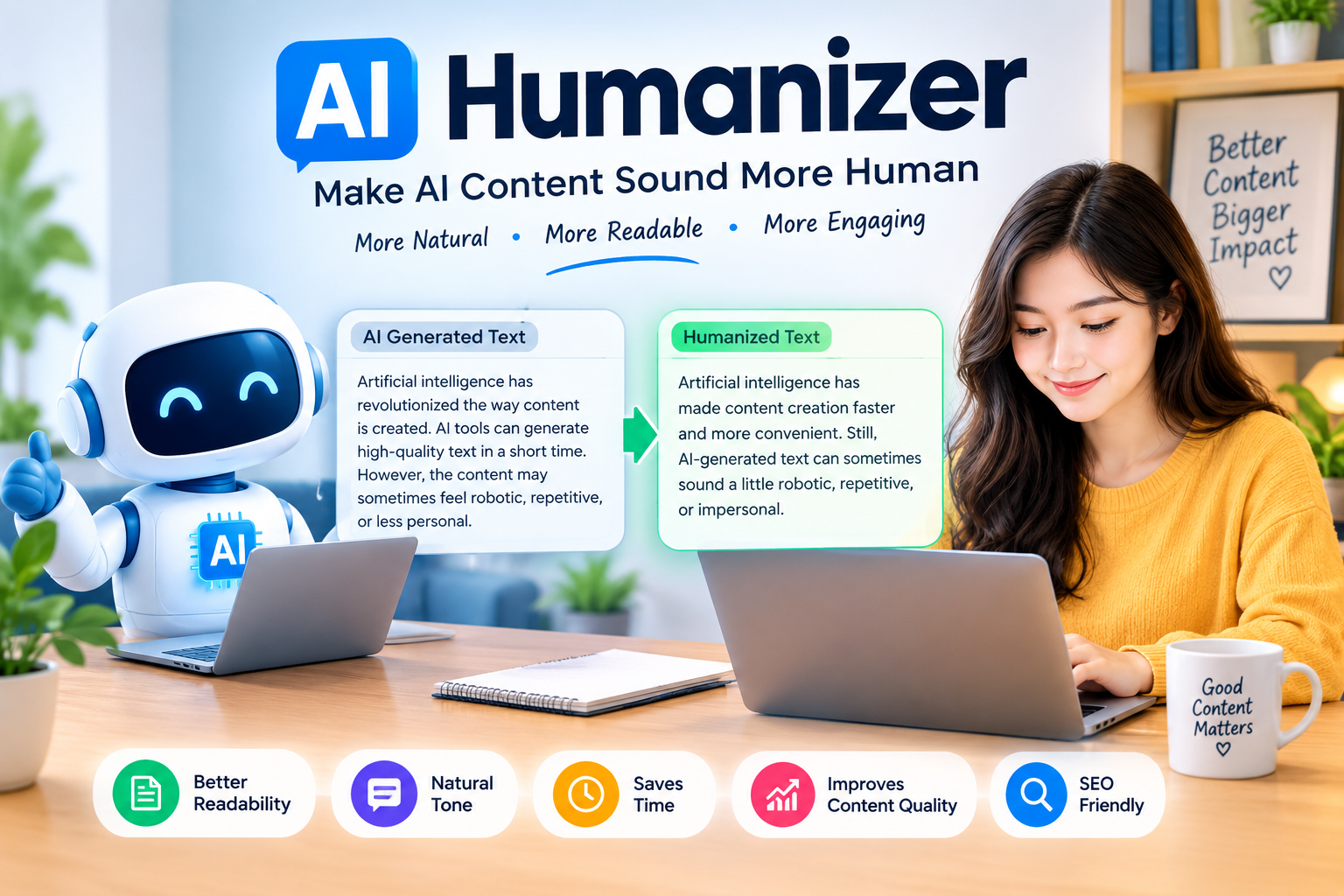
Artificial Intelligence has changed the way we create content, making the process faster and more convenient. Still, AI-generated text can sometimes sound a little robotic, repetitive, or impersonal. An AI Humanizer can help make that content feel more natural by improving its wording, flow, and conversational tone while keeping the original message intact.
Whether you’re a blogger, student, marketer, or content creator, using an AI Humanizer can make your writing easier and more enjoyable to read. In this guide, we’ll look at what an AI Humanizer is, how it works, its main benefits, and how it can help you create more natural and engaging content for both readers and SEO.
What Is an AI Humanizer?
An AI Humanizer is a tool that rewrites AI-generated text in a more natural writing style. Rather than changing the entire message, it focuses on how the information is presented.
For example, AI-generated writing may sometimes rely on similar sentence patterns or use formal words that people do not normally use in everyday writing. A humanizer tool can make those sentences smoother and more conversational.
This can be useful for bloggers, marketers, students, website owners, and other content creators who want their writing to sound less mechanical and more personal.
How Does This Tool Work?
An AI text humanizer typically analyzes the text to identify areas that may sound unnatural. It can look for repetitive wording, awkward sentence structures, unnecessary complexity, and a lack of sentence variety.
After analyzing the content, the tool rewrites selected parts using different vocabulary and more natural sentence patterns. A good AI text humanizer should maintain the original meaning instead of simply replacing words randomly.
Still, automated rewriting is not the final step. It is always a good idea to read through the result yourself. Human review can help catch factual mistakes, awkward wording, missing context, or information that needs to be updated.
Key Benefits for Content Creators
There are several reasons why content creators use AI content editing tools.
1. More Natural Writing:
It can make AI-generated content sound more conversational and comfortable to read.
2. Better Readability:
Complex sentences can be rewritten into simpler and clearer language.
3. Saves Time:
Instead of rewriting an entire AI-generated article manually, you can use a humanizer as a starting point for editing.
4. Helpful for Bloggers:
Website owners can use it to polish AI-assisted drafts before publishing them.
5. Better Content Flow:
It can improve transitions and introduce more variety into sentence structures, making an article feel less repetitive.
Is AI Humanizer Good for SEO?
This type of tool can help improve readability and the overall user experience, but humanizing AI content alone does not guarantee better Google rankings.
For SEO, the more important goal is to create content that genuinely helps readers. Your article should provide useful information, demonstrate expertise, contain accurate facts, and offer something valuable rather than simply trying to make AI-generated text look different.
Relevant keywords such as AI Humanizer, AI text humanizer, humanize AI text, and humanizer tool can be used naturally throughout an article. Avoid repeating keywords excessively, as keyword stuffing can make content harder to read.
Final Thoughts
This type of tool can be a useful tool for improving AI-assisted content. It can help turn a stiff or repetitive draft into writing that feels smoother, clearer, and more engaging.
However, it should not replace human creativity or judgment. The best approach is to use AI for ideas and initial drafts, use a humanizer to improve the writing style, and then review and edit the final version yourself.
When technology and human creativity work together, you can create content that is not only easier to read but also genuinely useful to your audience.
Share this content:












1 comment