Latest AI Technology: Trends, Innovations & Future of AI
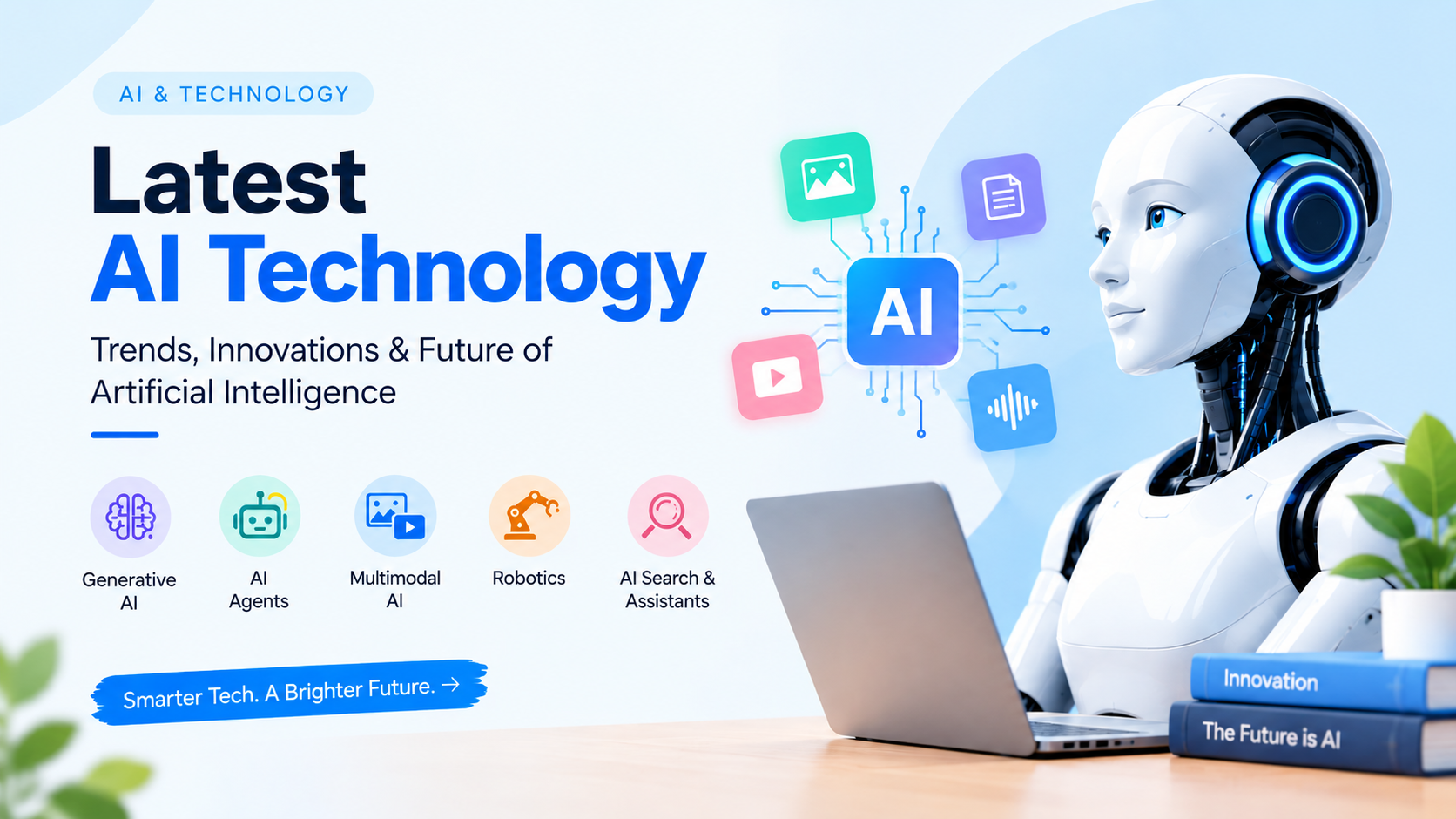
Latest AI Technology: Trends, Innovations, and the Future of Artificial Intelligence
Artificial intelligence is no longer something we only see in science fiction movies. It has become part of everyday life, from the apps we use on our phones to the tools businesses rely on. The latest AI technology is changing the way people work, study, create content, and solve problems.
In 2026, artificial intelligence is moving well beyond basic chatbots. New AI systems can understand and work with text, images, audio, and video. This allows them to handle more complicated tasks and communicate with people in more natural ways.
What Is the Latest AI Technology?
The term latest AI technology covers new developments that make artificial intelligence more capable and useful. Modern AI can analyze information, generate content, recognize patterns, and help people complete different types of tasks.
One of the biggest developments is multimodal AI. Instead of working with text alone, these systems can understand different types of information, including pictures, voice, video, and written content. This can be useful in areas such as education, business, software development, customer service, and digital content creation.
Generative AI Is Changing Content Creation
Generative AI has become one of the most noticeable developments in recent years. These tools can create articles, images, videos, music, presentations, and even computer code from simple instructions.
For example, an AI writing tool can help create a first draft of an article, while an image-generation tool can turn a written idea into a visual. AI video tools are also making it easier for beginners to experiment with video production without advanced editing skills.
Still, AI-generated content should not always be accepted without checking it. AI can sometimes provide incorrect information, so human review remains important.
AI Agents and Automation
Another interesting development is the growth of AI agents. Traditional chatbots usually respond to questions, while AI agents are designed to handle a series of tasks based on a user’s instructions.
An AI agent could potentially research information, organize data, prepare documents, or assist with programming. As these systems improve, businesses may use them to reduce repetitive digital work and save time.
AI in Robotics
Artificial intelligence is also making robots more capable. AI-powered robots can use cameras and sensors to understand their surroundings, identify objects, and navigate different environments.
These technologies are being explored in industries such as manufacturing, logistics, agriculture, healthcare, and home automation. Better AI could eventually allow robots to work more effectively alongside people.
AI-Powered Search and Personal Assistants
Search engines and digital assistants are changing as AI becomes more advanced. Instead of simply matching keywords with webpages, AI-powered systems can understand questions and provide more conversational responses.
Modern AI assistants can also help with writing, research, brainstorming, learning, and data analysis. This makes them useful for both everyday users and professionals.
The Future of AI Technology
The future of AI will likely bring improvements in automation, personalization, accuracy, and interaction with the physical world. However, important questions about privacy, security, copyright, misinformation, and responsible AI development will continue to receive attention.
Overall, the latest AI technology is changing how we interact with computers and digital services. From generative AI and multimodal systems to AI agents and robotics, these technologies are opening up new possibilities. Keeping up with these developments can help individuals and businesses understand how AI may shape the next generation of technology.
Share this content:










3 comments